Dont Show Again Popup Android Permissions
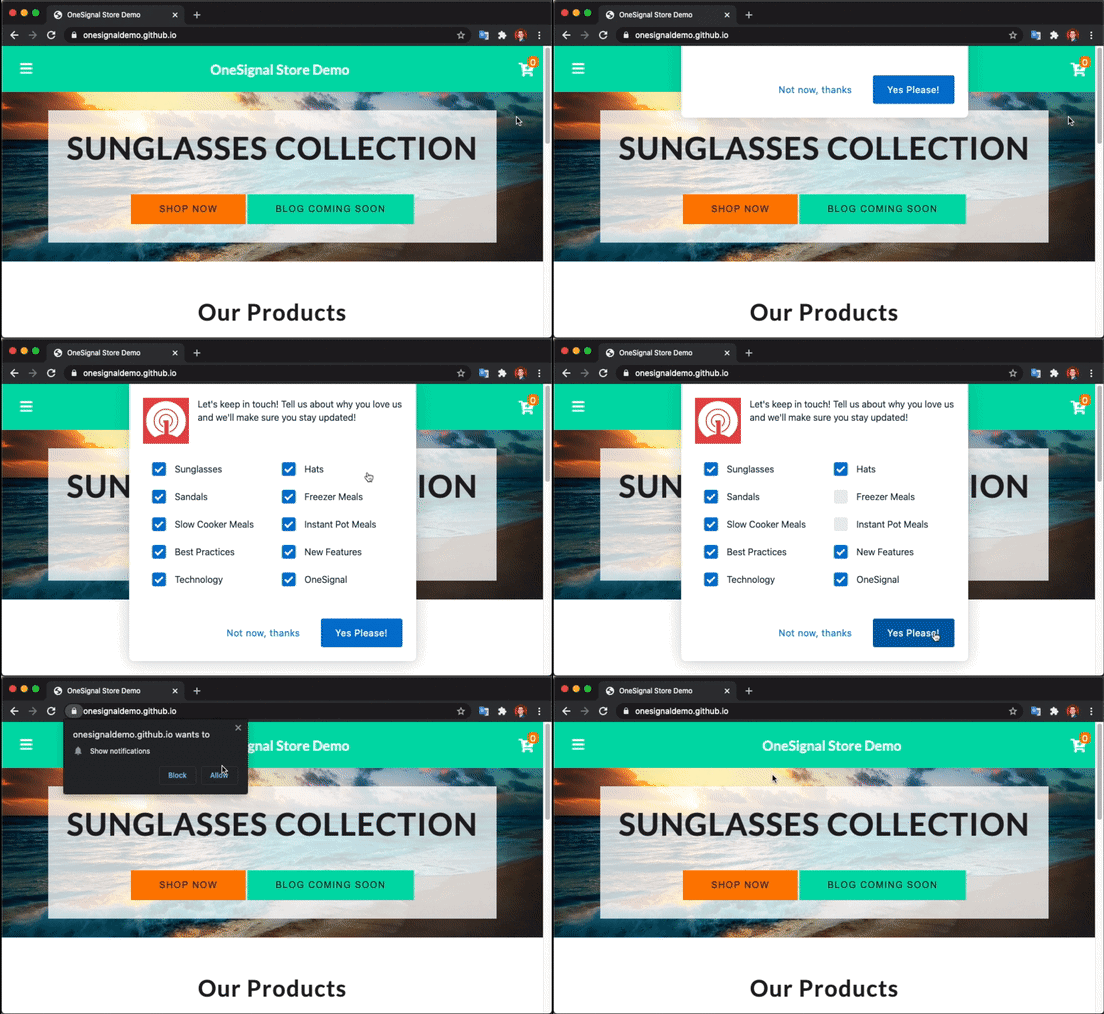
Case showing the Slide Prompt with Category Tags.
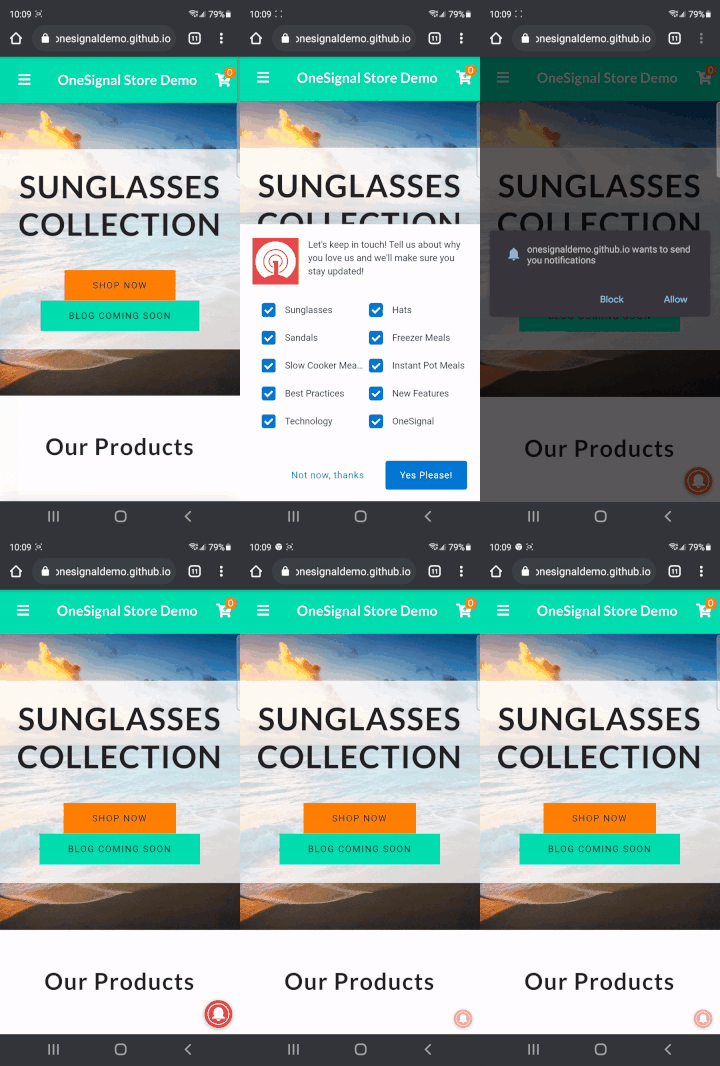
Example Slide Prompt with Category Tags on Android.
"Prompting" is asking user'southward permission to transport them push notifications. Prompts are pop-up messages presented past the browser or mobile app and crave the user to click "Allow" to be subscribed.
If you have a mobile app, see our iOS Prompt Guide. Android Mobile App devices don't need to be prompted, they get subscribed when opening your app for the first time.
Spider web Push button works on Desktop and Android. Apple does not support web push button on iOS similar iPhone and iPad. Browsers provides their own Native Permission Prompt which is required to be both shown and clicked "Let" for the user to subscribe to your website.
Browsers now highly recommend websites be more selective when information technology comes to showing the Native Permission Prompt. This is why using OneSignal Prompts or your own custom "soft prompts" earlier the native prompt are encouraged.
OneSignal provides "soft prompts" that are shown before the Native Permission Prompt and engage the user to select categories they are interested in getting messages nigh and provide phone or email. These prompts do non supplant the native prompt and do not subscribe the user to web button.
These prompts are beneficial because they increase the likelihood users will stay subscribed to your messages and are highly recommended by the browsers. Permission prompts do three things:
- Inform a user of the value of subscribing to Push Notifications, Email and SMS
- Prevent users from being blocked from subscribing.
- Trigger a Native Prompt, if users indicate intent.
OneSignal Prompts are a 'soft request', significant that they are not invoking the 'difficult request' of the browser's Native Permission Prompt. This is important because if a user denies the native prompt, the developer is unable to prompt the user once again, unless the user goes through a multi-step procedure to re-enable these permissions. On the other mitt, if a user dismisses a Soft Prompt, the app or website can still present them the option after on.
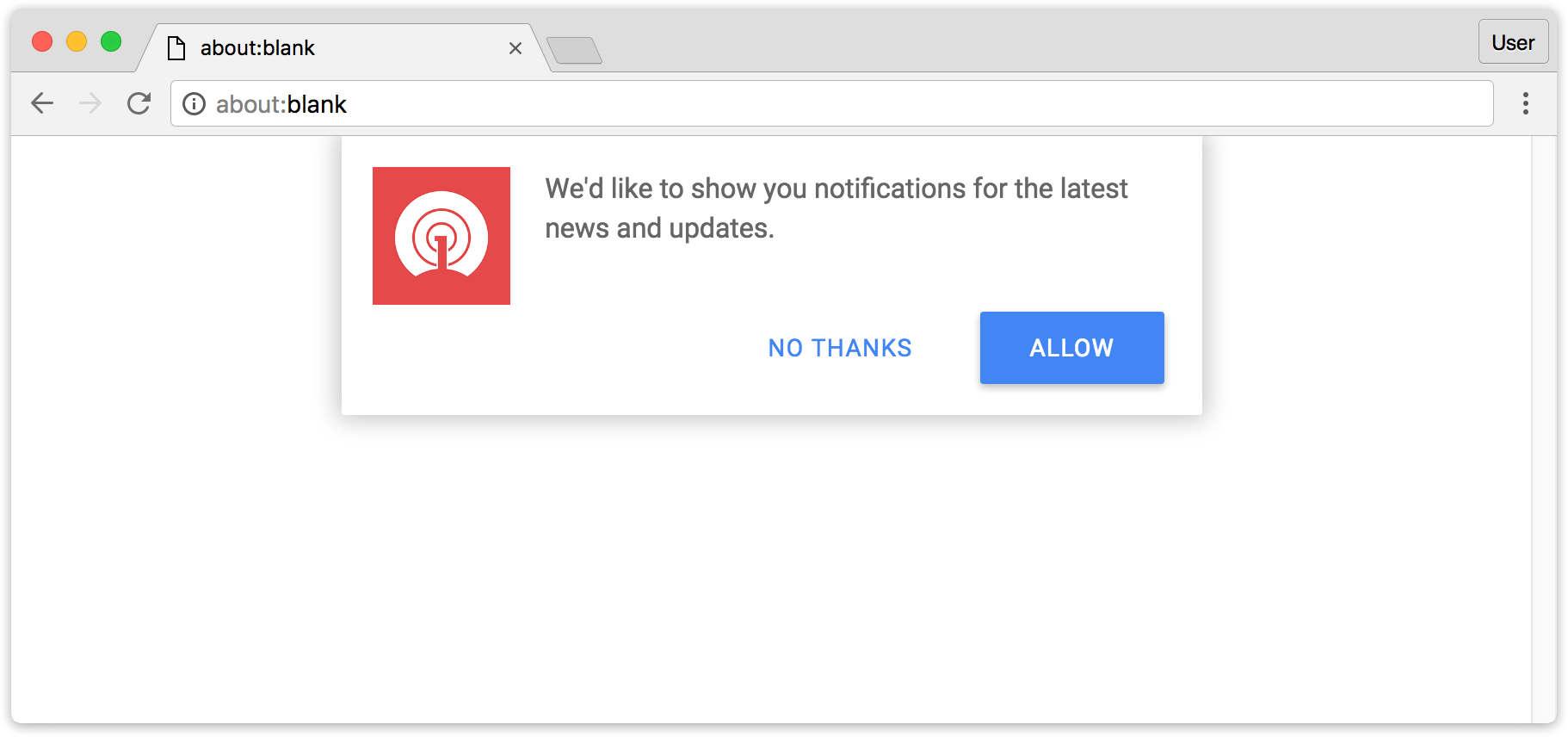
The Slide Prompt displays on top of your site, in the top middle of the browser (bottom centre on Android).
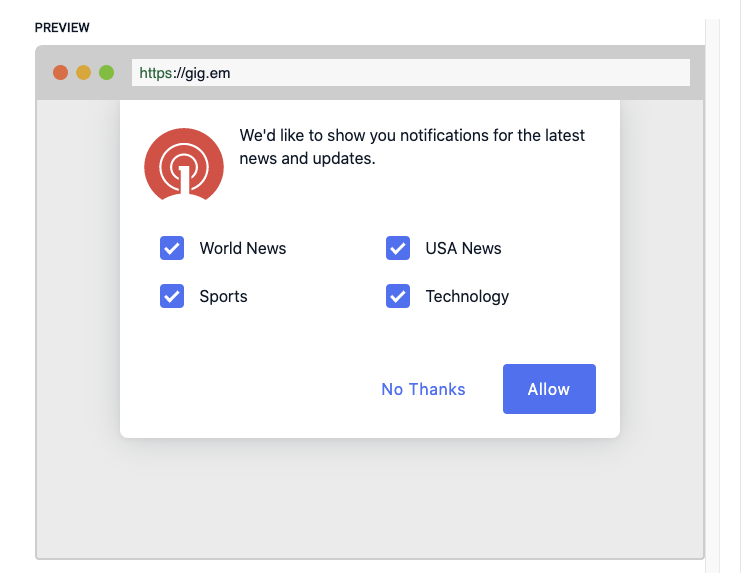
The Category Slidedown works just like the regular Slide Prompt except information technology too allows subscribers to opt-in or out of notification categories. The Category Slidedown is configurable through the dashboard for Typical Site setup and tin can also be configured via custom code.
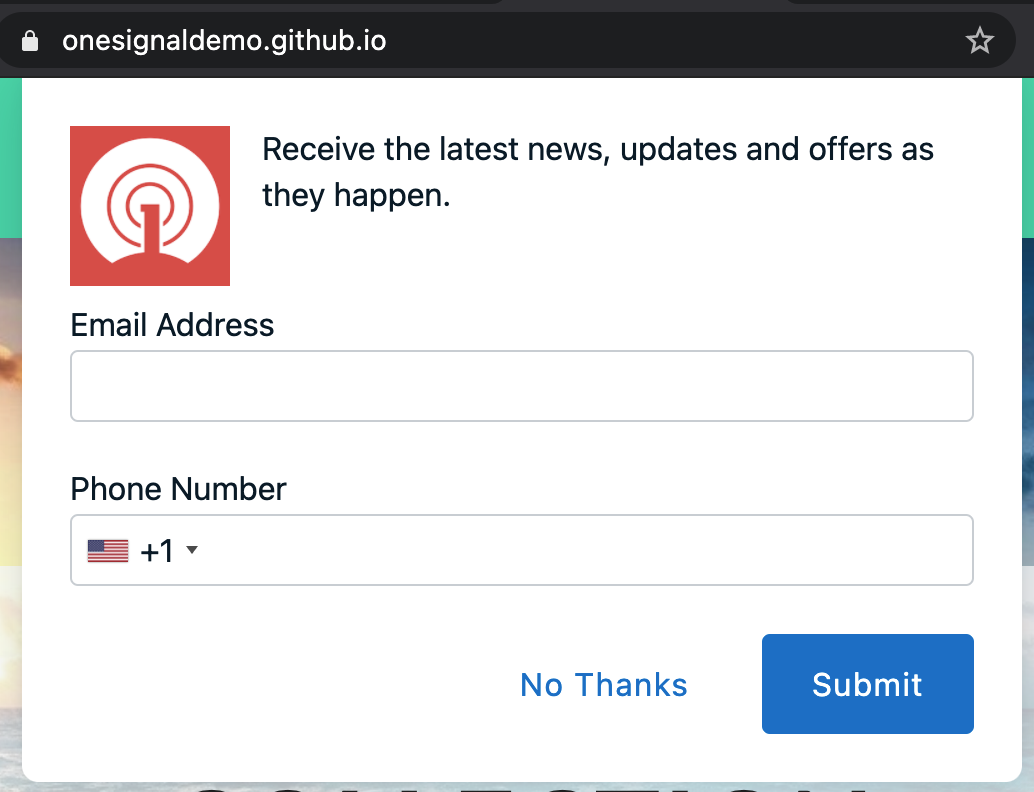
The Email & Telephone Number Slidedown adds optional text fields for users to add email, phone number or both. The Category Slidedown is configurable through the dashboard for Typical Site setup and can besides be configured via custom lawmaking.
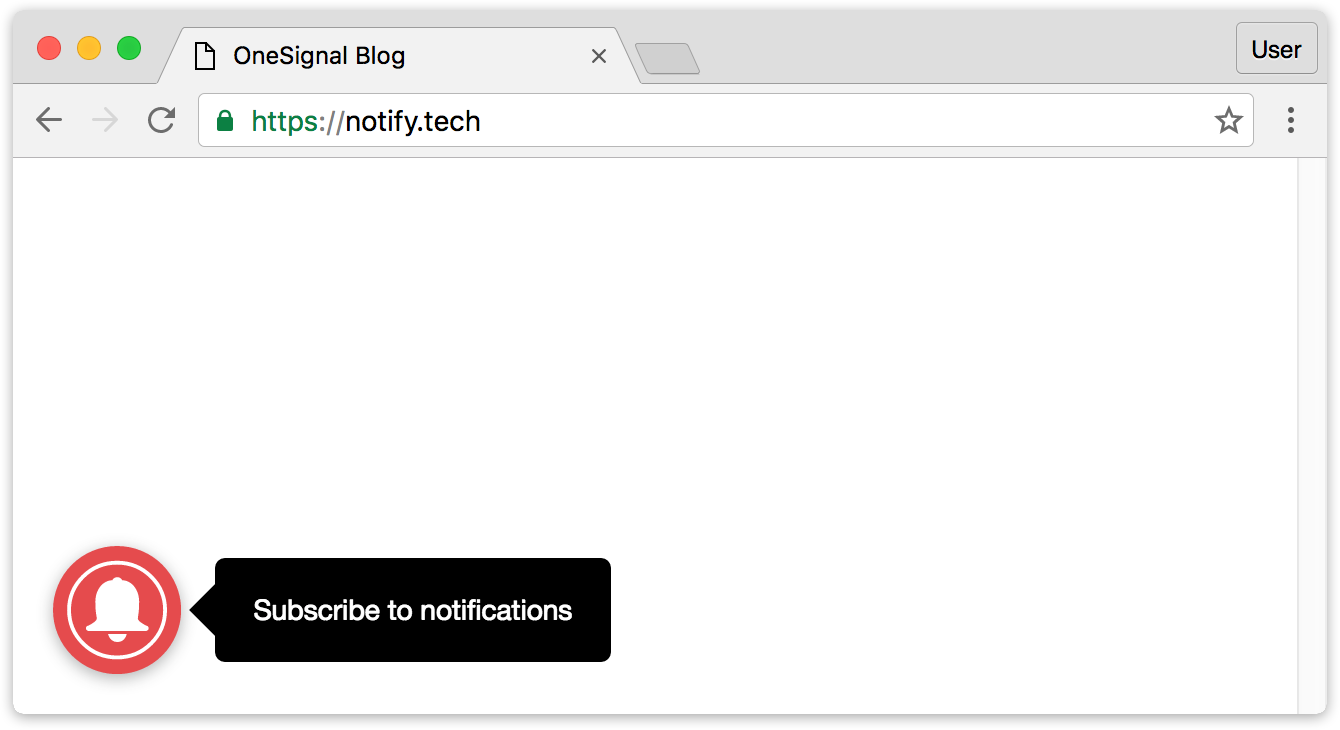
The subscription bell is a small widget that resides in the lower left or right corner of your site, which users tin can click to bring up the Native Permission Prompt for your site. Information technology is designed to be small plenty that y'all may continue it on your site at all times, and does not require users to dismiss it.
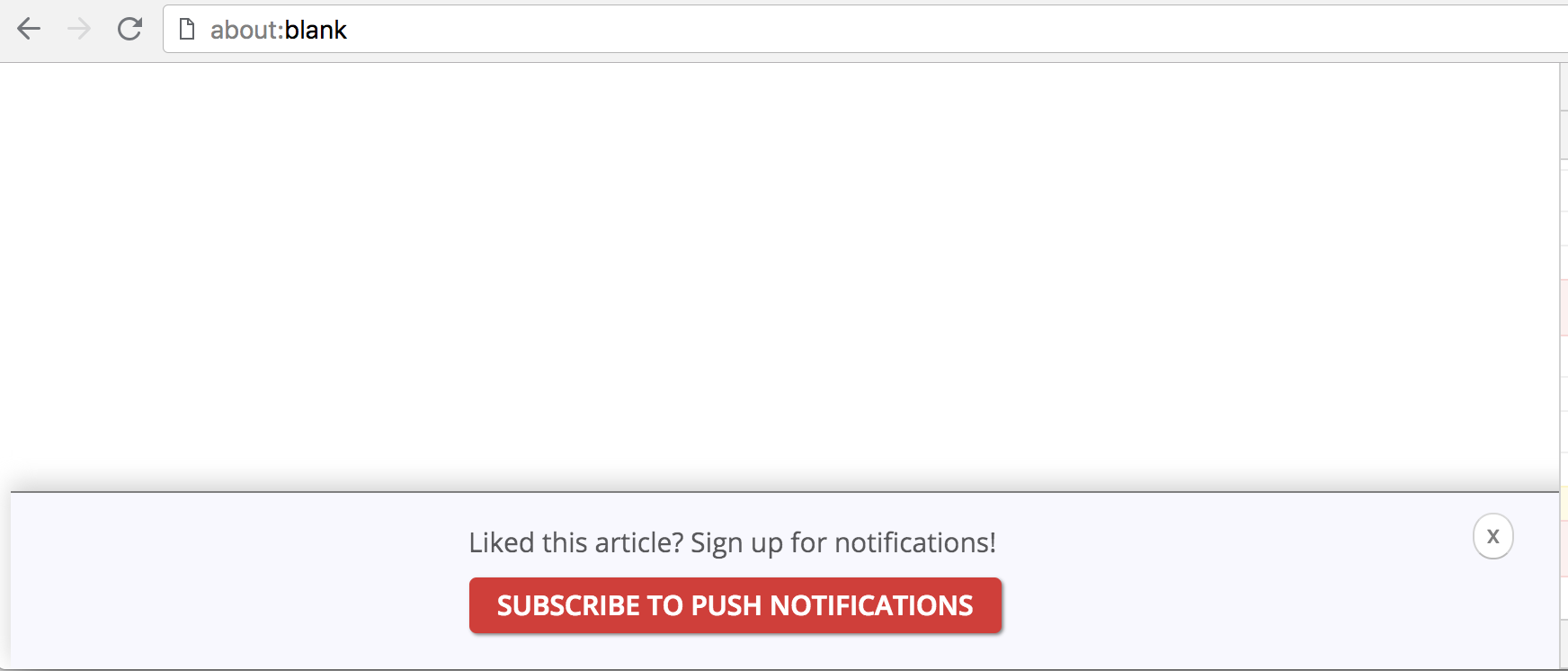
Just add a snippet to your site's markup and it will exist rendered as a button or link that triggers subscription catamenia when user chooses to subscribe. Provides adept user experience. Can exist customized through the dashboard at any time without changes to your site's lawmaking.
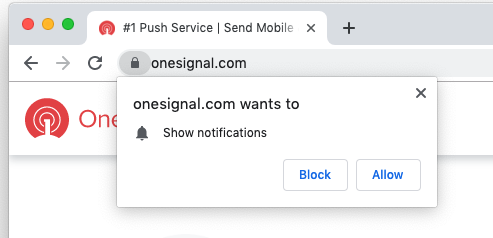
HTTP but - The HTTP Pop-Up Prompt is presented in a separate pop-upwards window for HTTP sites. It cannot be triggered alone and must follow the above prompts.

HTTPS sites may cull not to apply a soft prompt and instead trigger the browser'southward Native Permission Prompt. Notwithstanding, immediately prompting users to subscribe with the Native prompt is being deprecated by the browsers and is not recommended.
Best practice is to delay the Slide or Native Prompt from showing on screen. Giving visitors time to browse your content earlier prompting can amend engagement and ensure the browser doesn't penalize your site.
Y'all can delay prompts based on:
- page views: the number of times a page is viewed/loaded on the screen
- seconds: amount of time passed in a single page to show the prompt
Programmatically show the prompt anytime!
Use our SDK Prompting Methods to testify the prompt with lawmaking.
Make sure to turn off the "Auto-prompt" option to call these methods.
Using the Typical Site Setup you tin customize showing the Slide or Native prompt after Ten corporeality of seconds the user is on the site and/or afterwards Ten amount of page views. For example, show the prompt 30 seconds after the user visits three pages.
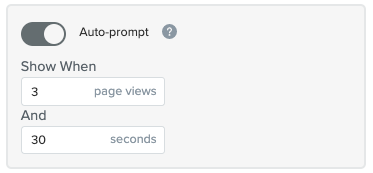
If using Custom Code Setup, run into examples for configuring prompt delays through OneSignal init.
WordPress requires some more steps shown in this guide on calculation a filibuster to your WordPress Site.
If a user clicks "Block" (Chrome), "Don't Allow" (Safari), or "Never Allow" (Firefox) on the Native Permission Prompt they can never be prompted from the site again and must subscribe or reset permissions through a multi-step process through the browser settings. This is ane reason information technology is recommended to apply the OneSignal Prompts.
If a user clicks "X" on the Native Permission Prompt or "No" on the OneSignal Prompts, and then the following occurs:
Chrome - You have 3 tries to get the user to subscribe, after the 3rd "X" click on the required native permission prompt, they will not get prompted over again for a calendar week. More than on this Chrome characteristic here. For Chrome on Android, meet Why is Slide Prompt Showing on Mobile.
Firefox - Offset with Firefox lxx once a user clicks "X" they will need to click the small notification icon in the browser to be prompted again. Also, with Firefox 72+ the Native Browser Prompt is prevented from showing, see below Why do I meet the Slide Prompt on Firefox when I want the Native Browser Prompt for more details.
The OneSignal Side Prompt will show later three days, 7 days, and so 30 days if the user clicks "Allow" or "Abolish" on information technology and is all the same not subscribed.
For example, if a user clicks "Permit" on the slide prompt, but "x" on the native prompt, it will not prove once more for three days the commencement time. Later on iii days, it will show over again and if the user clicks "Cancel" or "Permit" just "X" on the native prompt, it will non show again for 7 days. After 7 days if the user does this once again, information technology will be every thirty days.
If the user clears cookies or browser data, the cycle resets.
For testing purposes, please follow Clearing your cache and resetting button permissions to admission your site equally a new first-time user.
It is best to ask visitors to subscribe later yous have provided some value to them through the site. This could be after they take read your manufactures or in a "site settings"/"contour" page, and/or in your shopping-cart or cheque-out flow.
Common all-time practices include:
- Using a Delayed Slide Prompt.
- Embedding the Custom Link Prompt in the heart and/or at the end of the manufactures and within a "Subscription Page" or section of the user'southward Profile page if yous have one.
- Adding the Bell Prompt to permit users to easily subscribe/unsubscribe throughout the site.
- If you add your ain telephone call-to-action buttons (similar add to cart or subscription events) on the site or want to evidence the Native Browser Prompt anytime, utilise the
OneSignal.showNativePrompt();method. Your site must exist HTTPS and did non select "My site is not fully HTTPS" in the OneSignal Site configuration.
You tin put whatever language you like into the prompt. If you lot are trying to dynamically modify the prompt linguistic communication based on the page, then switch to the Custom Code Setup and initialize OneSignal based on the linguistic communication of the page.
Currently OneSignal does non automatically interpret the Slide Prompt , Bell Prompt , or Custom Link prompt. They default to English language, merely yous can put any language and bulletin you want.
The Native Browser Prompt volition automatically translate to the browser language settings.
Using the Custom Code Setup y'all can initialize OneSignal with the unlike prompting options. Y'all would need to setup your own manner to trigger the A/B/C/D etc tests which initialize OneSignal.
Equally a bonus, you can use the Subscription Change method to discover when the user subscribed and add together Data Tags based on which test won the subscription.
Make sure you are not in incognito mode, private browser mode or guest browser mode.
Yep! Please meet our guide Auto-Segment By Subscription Page.
Apple still does non support Web Button on iOS like iPhone and iPad. This is an Apple limitation and no push provider tin can provide Web Push Notifications on iPhone and iPad. You need an iOS mobile app to send push on iPhone and iPad. GoNative.io is a great way to turn your website into a mobile app.
The Native Browser Prompt will not show while in Incognito Way, Private Browser fashion or Guest Browser mode. It volition also not show right abroad on Safari 12.i+ or Firefox 72+ (more details).
Besides make sure you are using a browser and device that supports web button.
Check your prompt setup to brand certain Auto-prompt is turned on and the Delayed Prompts are not blocking y'all.
Concluding would be to follow these steps to reset your cookie and browser enshroud to visit your site similar a beginning fourth dimension user.
If you use Typical Setup, brand sure to disable Car-Prompt for both Slide and Native prompts. If you lot employ the bong prompt, you will need to remove the OneSignal init call on pages you exercise not want the bell to prove or switch to the Custom Lawmaking Setup.
You lot can now trigger the Native or Slide prompt with the SDK methods. Run into the prompt guide for details.
WordPress Users: there is currently not a way to disable the OneSignal subscription prompts on certain pages/posts through the plugin directly, this volition require adding code to the site.
Nosotros provide ii options on how to setup the prompts on dissimilar pages of your site:
https://documentation.onesignal.com/docs/web-push-wordpress-faq#how-practice-i-enable-the-plugin-for-certain-pages-only
With Firefox 72+ there is a change that requires a user to click a button to show the native browser prompt. If you try to automatically show the native browser prompt, you will meet an icon inside the browser like this:

The user must click this icon to view the Native Browser Prompt on Firefox. This is why we default to the Slide Prompt on Firefox because it is more "eye-catching" and requires the 2-footstep opt-in in either case.
If you exercise not want to show the Slide Prompt every bit default, you must turn off the "Motorcar-Prompt" switch in the Prompt Editor:
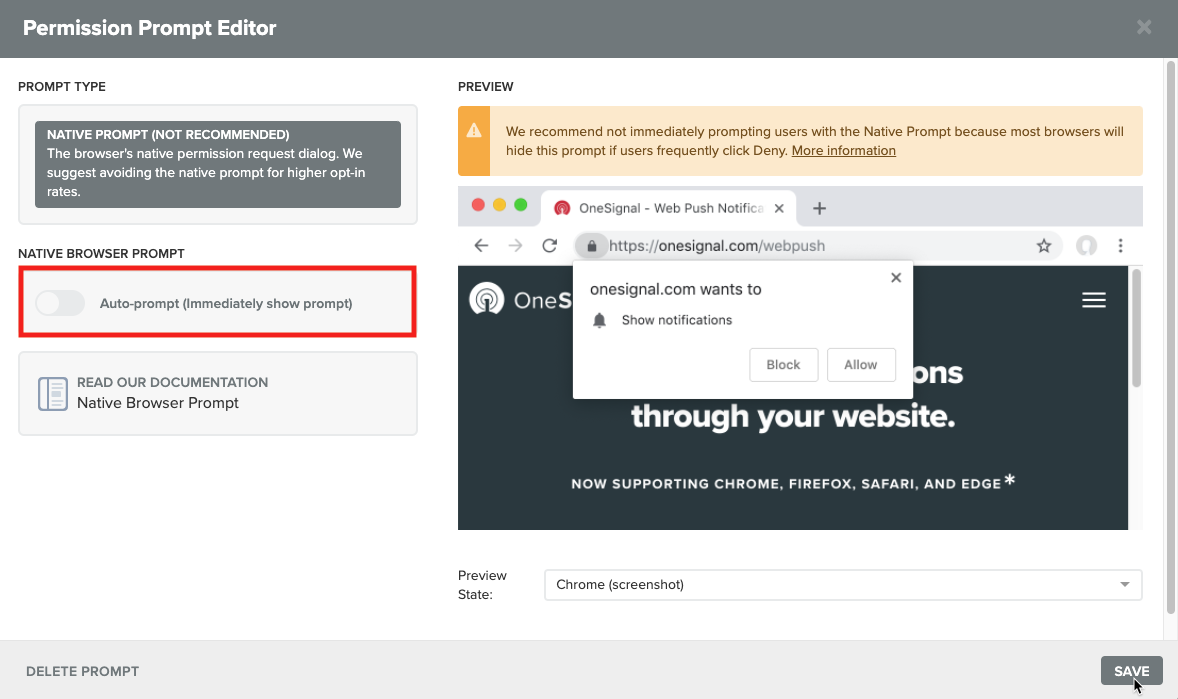
Press "Save" and "Save" again on the side by side page. You can and then employ the OneSignal.showNativePrompt() SDK method to trigger the Native Prompt on any page you want. Case lawmaking:
<script src="https://cdn.onesignal.com/sdks/OneSignalSDK.js" async=""></script> <script> var OneSignal = window.OneSignal || []; OneSignal.push(office() { OneSignal.init({ appId: "3beb3078-e0f1-4629-af17-fde833b9f716", }); OneSignal.showNativePrompt(); }); </script> The reason for this behavior is due to a change that Google made on December 5th 2017 to Chrome on Android. It is a very user unfriendly popular-up that nosotros deliberately added the double prompt on android to avoid your users from having a bad experience on your site.
For more details on this or if you really want to but show merely the native prompt encounter Why is Slide Prompt Showing on Mobile.
Source: https://documentation.onesignal.com/docs/permission-requests
0 Response to "Dont Show Again Popup Android Permissions"
Post a Comment